
The Glory of the Vietnam People’s Public Security from a Marketing Perspective
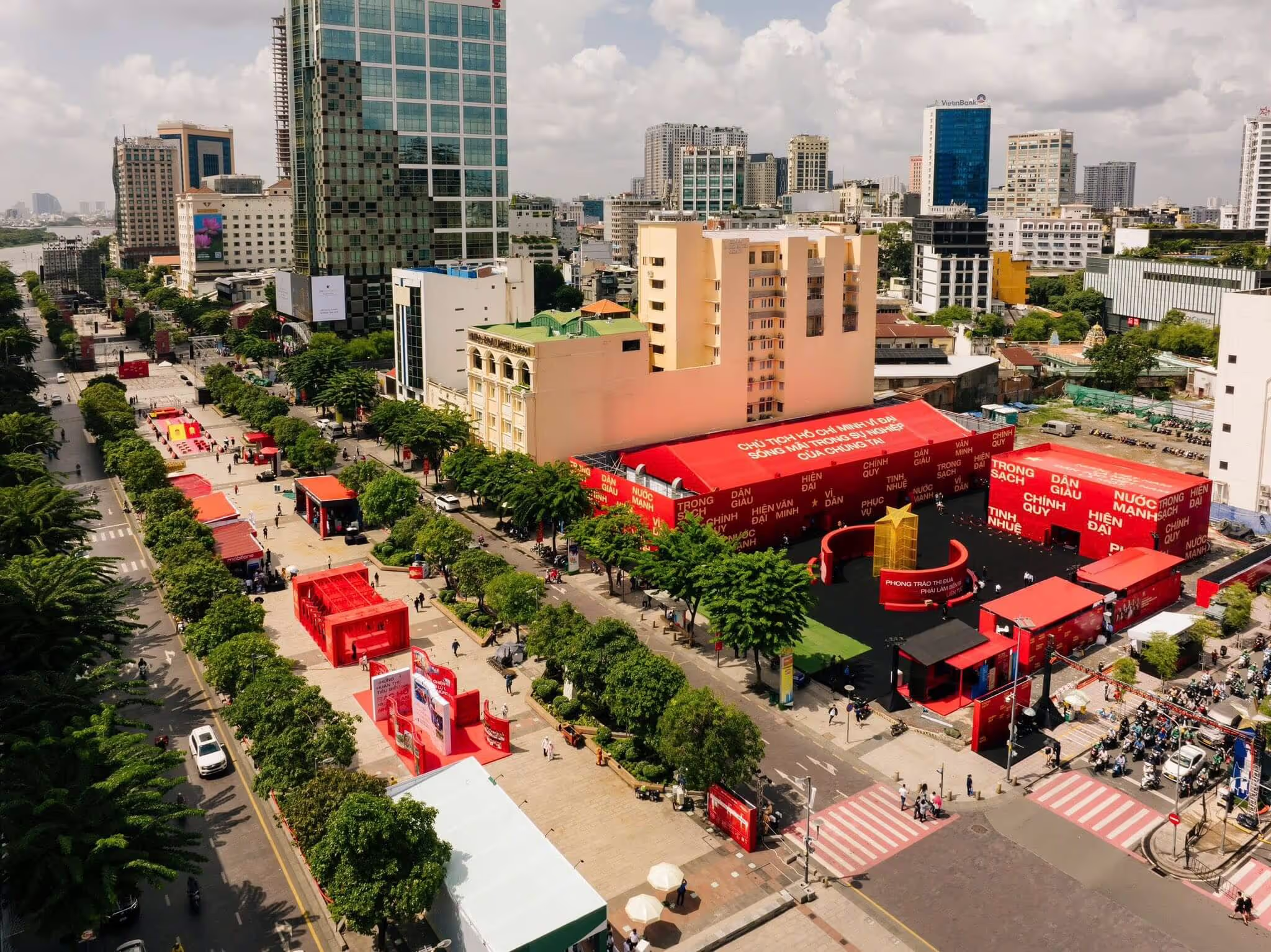
1. Context & Strategic Mindset: From Propaganda to Government Branding
When we began shaping the ideas for the campaign “Vinh Quang Công An Nhân Dân” (The Glory of the People’s Public Security Force), we at Zeit understood that this was not a conventional communication project. Working with a disciplined, symbolic, and sensitive institution like the People’s Public Security meant every communication decision had to carefully balance two essential factors: official integrity and emotional resonance with the public.

From the earliest stages, the biggest question we asked ourselves was: How do we apply modern marketing thinking—specifically Institutional Branding and Emotional Marketing—to a field traditionally dominated by top-down propaganda?
The answer was clear: we had to shift the entire narrative from “propaganda execution” to “organizational brand-building,” or more specifically, Government Branding.
Through this lens, the campaign wasn’t only about conveying information about the People’s Public Security Force—it aimed to reposition their image in the public mindset: from a distant administrative authority to a human, compassionate, community-oriented force defined by silent sacrifice. This became the strategic foundation of the entire campaign.
2. Building the Brand Narrative: “Silent Sacrifice – Safeguarding Peace”
At the heart of all campaign activities was a unified Brand Narrative—the emotional core we wanted the public to remember:
“Silent Sacrifice – Safeguarding Peace.”
This message was not merely a slogan; it served as the emotional backbone guiding the design of every touchpoint in the audience journey.
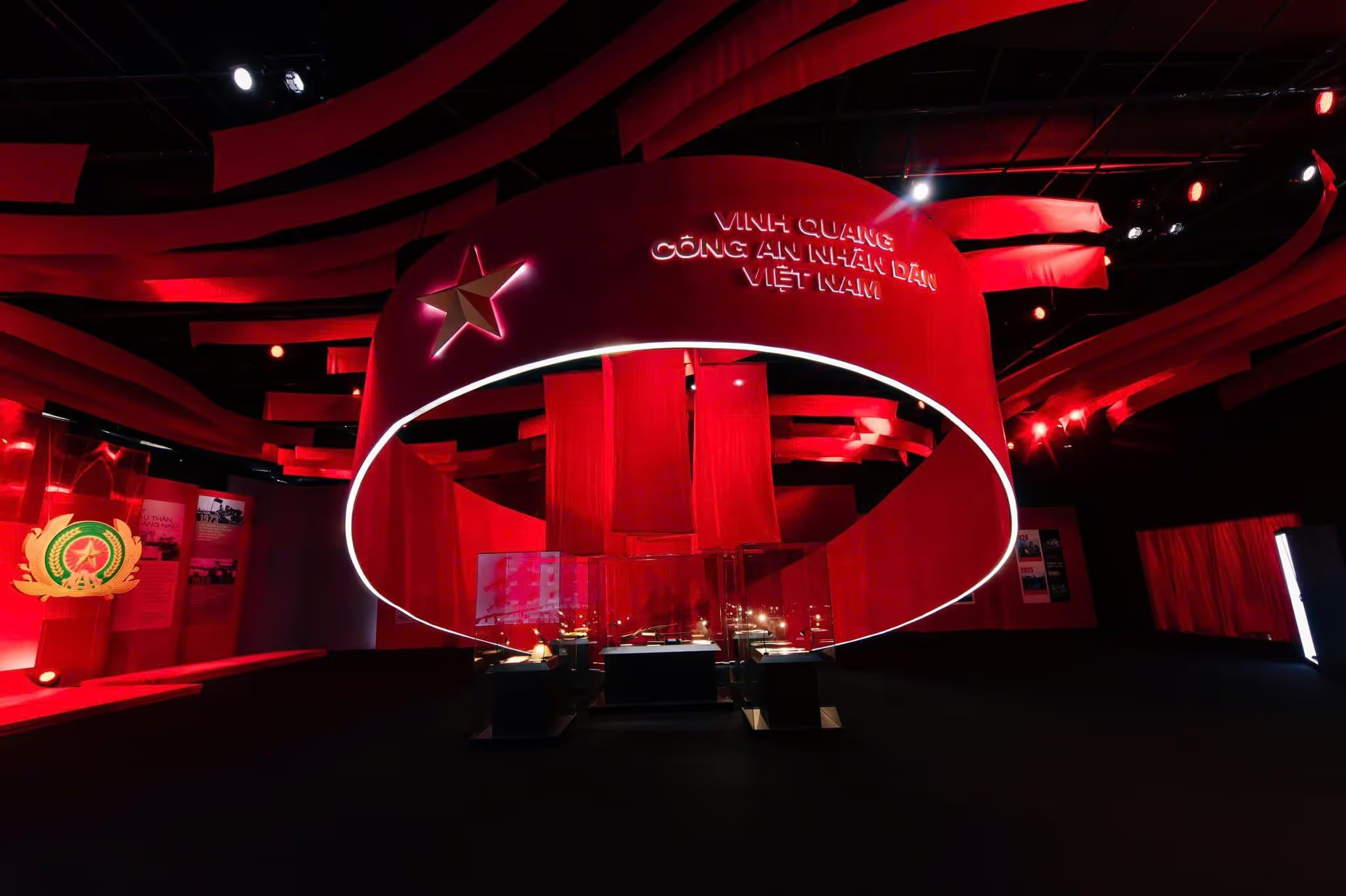
From the multisensory exhibition space to the artifact museum, film rooms, and interactive booths, each environment was crafted so visitors would not only see the People’s Public Security Force—but truly feel what they experience: overnight shifts, flood rescue missions, moments of danger, the quiet worries of families behind every uniform. Instead of relying on slogans, we allowed space, light, sound, artifacts, and stories to speak for themselves.
The musical Gala served as the emotional climax of the campaign. Zeit structured the program like a “symphony of emotions”:
- Opening with the figure of Võ Thị Sáu - an early symbol of the force
- Moving into the sacrifices made in peacetime, when danger persists even without the sound of gunfire
- Transitioning into modern, real-life stories that reflect how the force contributes to national peace today
The spirit of “Silent Sacrifice – Safeguarding Peace” was conveyed not by repetition, but by guiding the audience step-by-step through layers of historical and emotional context.
.avif)
Even the choice of Soobin to perform Tiến Quân Ca (The National Anthem) was a strategic artistic decision. We carefully calculated the arrangement, timing, and emotional energy to preserve the anthem’s solemnity while creating a moment powerful enough to resonate with younger audiences—bridging tradition with a modern artistic experience.
3. Omni-channel Communication & Storytelling: Bringing Modern Marketing into Public Sector Communication
On the communication front, Zeit implemented a comprehensive omni-channel strategy to ensure that the campaign’s message lived beyond the event itself. Content was distributed across television, press, Facebook, TikTok, YouTube, and more.
Each platform featured content tailored to the behaviors and expectations of its audience segments, yet all remained consistent with the brand’s emotional DNA: sacrifice – peace – humanity – discipline.
TikTok: The Engine of Emotional Spread
Instead of crafting rigid, slogan-heavy clips, we focused on micro-content:
– short videos of officers in the flood zones
– behind-the-scenes moments
– stories of missed holidays and family sacrifices
– heartfelt interviews with families of fallen officers
All were told in the most authentic, human way possible.
The goal wasn’t to convince but to touch.
Throughout the campaign, Zeit adopted the Storytelling Framework: “Real People – Real Stories – Real Emotions.”
Rather than glorifying officers in a one-dimensional heroic tone, we told small, specific, true stories—with names, faces, and everyday details:
a young officer spending years away from home during New Year’s,
another forgetting his own birthday while rescuing people in a flood,
a mother silently proud yet anxious each time her child puts on the uniform.
These narratives made the image of the People’s Public Security Force more relatable and emotionally grounded, helping the public feel closer, not further, to the institution.
This Narrative-Driven Content approach allowed the campaign to avoid rigid political messaging while aligning with global content trends that prioritize authenticity and emotional depth to build stronger Brand Affinity.
4. Brand Identity & Brand Governance: Disciplined in Form, Modern in Expression

One of the aspects Zeit paid special attention to was the consistency of brand identity throughout the campaign. We treated visual identity not as decoration, but as a fundamental part of disciplined brand governance.
The color palette—Red, Green, and Gold Bronze—was selected to honor the symbolic heritage of the People’s Public Security while being refined to appear modern, stylish, and dignified.
Everything from symbols, typography, slogan placement, and ATL/BTL/Digital materials was meticulously unified.
Wherever the audience encountered the campaign—on television, at the event, or online—they immediately recognized it as part of a single, coherent story.
“Vinh Quang Công An Nhân Dân Việt Nam” is arguably one of the most complex campaigns Zeit has ever executed, involving dozens of touchpoints across on-ground events, exhibitions, experiential design, digital communication, and PR.
But precisely because of that complexity, it has become a remarkable case study illustrating how modern marketing thinking can be applied to public-sector communication—where “branding” for government agencies is no longer about banners and slogans, but about designing experience, narrative, and emotion with strategic intention.
If traditional state communication was often seen as rigid and one-dimensional, campaigns like this demonstrate a new direction: when policy, public institutions, and marketing meet on the foundation of real stories and genuine emotion, the public listens more willingly.